-
Wastewater catchment areas in Great Britain
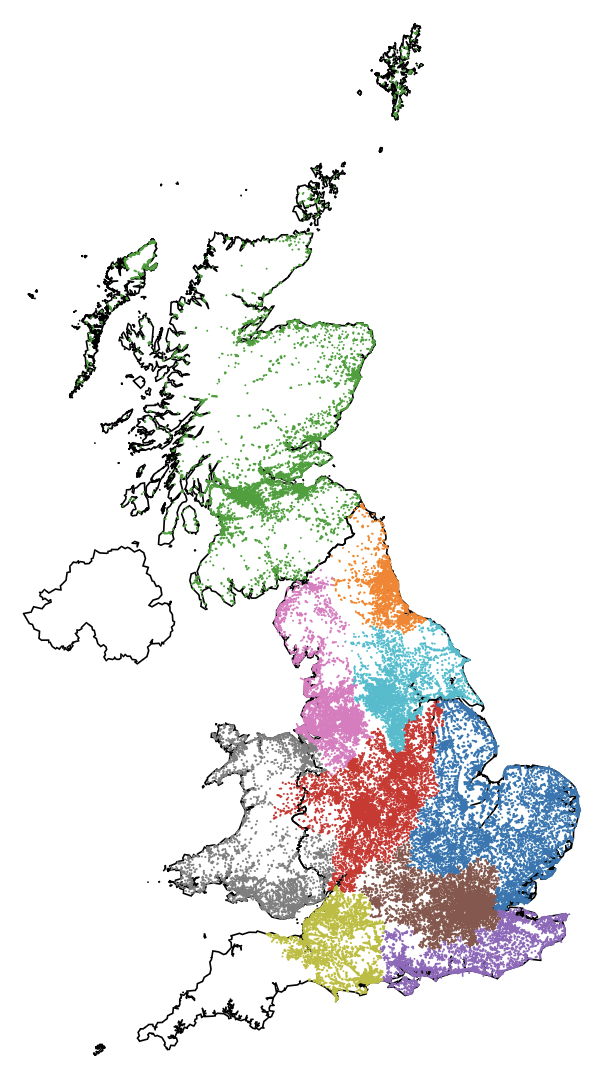 Wastewater catchment area data are essential for wastewater treatment capacity planning and have recently become critical for operationalising wastewater-based epidemiology (WBE) for COVID-19. Owing to the privatised nature of the water industry in the United Kingdom, the required catchment area datasets are not readily available to researchers. Here, we present a consolidated dataset of 7,537 catchment areas from ten sewerage service providers in the Great Britain, covering more than 96% of the population of England and Wales. We develop a geospatial method for estimating the population resident within each catchment from small area population estimates generated by the Office for National Statistics. The method is more widely applicable to matching electronic health records to wastewater infrastructure. Population estimates are highly predictive of population equivalent treatment loads reported under the European Urban Wastewater Treatment Directive. We highlight challenges associated with using geospatial data for wastewater-based epidemiology.
 -
Understanding and managing uncertainty and variability for wastewater monitoring beyond the pandemic: Lessons learned from the United Kingdom national COVID-19 surveillance programmes
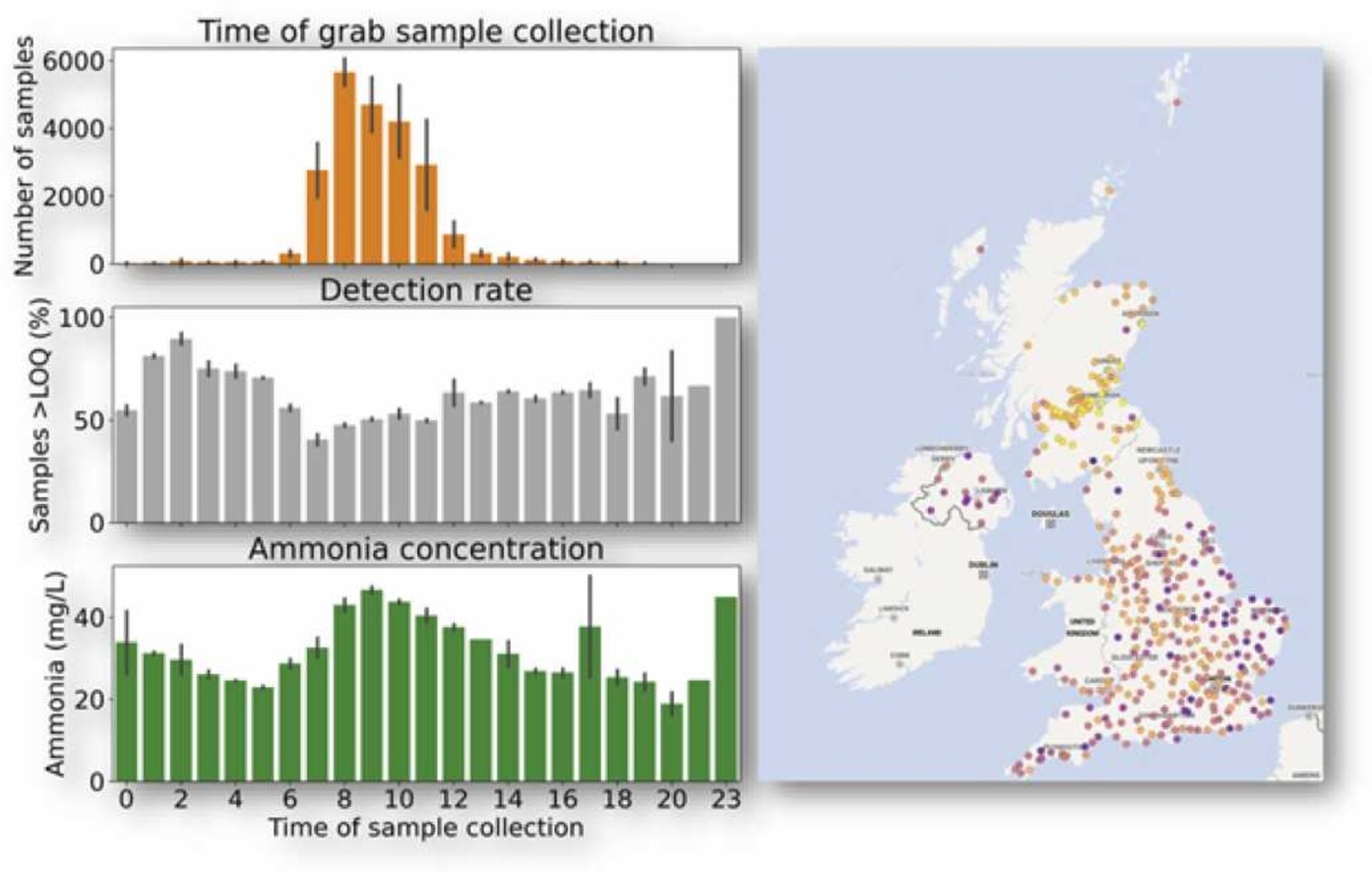 The COVID-19 pandemic has put unprecedented pressure on public health resources around the world. From adversity, opportunities have arisen to measure the state and dynamics of human disease at a scale not seen before. In the United Kingdom, the evidence that wastewater could be used to monitor the SARS-CoV-2 virus prompted the development of National wastewater surveillance programmes. The scale and pace of this work has proven to be unique in monitoring of virus dynamics at a national level, demonstrating the importance of wastewater-based epidemiology (WBE) for public health protection. Beyond COVID-19, it can provide additional value for monitoring and informing on a range of biological and chemical markers of human health. A discussion of measurement uncertainty associated with surveillance of wastewater, focusing on lessons-learned from the UK programmes monitoring COVID-19 is presented, showing that sources of uncertainty impacting measurement quality and interpretation of data for public health decision-making, are varied and complex. While some factors remain poorly understood, we present approaches taken by the UK programmes to manage and mitigate the more tractable sources of uncertainty. This work provides a platform to integrate uncertainty management into WBE activities as part of global One Health initiatives beyond the pandemic.
 -
Thematic recommendations on knowledge graphs using multilayer networks
We present a framework to generate and evaluate thematic recommendations based on multilayer network representations of knowledge graphs (KGs). In this representation, each layer encodes a different type of relationship in the KG, and directed interlayer couplings connect the same entity in different roles. The relative importance of different types of connections is captured by an intuitive salience matrix that can be estimated from data, tuned to incorporate domain knowledge, address different use cases, or respect business logic.
-
Current Environmental Monitoring Cannot Constrain the Effect of Vaccines on SARS-CoV-2 Transmission
This paper presents summary statistics of wastewater data and a Bayesian hierarchical log-linear regression model developed to predict weekly COVID-19 case rates (NHS Pillar 1 and 2) based on wastewater surveillance data. Outputs are analysed to investigate whether the AstraZeneca and Pfizer/BioNTech vaccines inhibit SARS-CoV-2 infection and transmission in addition to preventing symptomatic disease. No significant deviation was observed between reported case rates and SARS-CoV-2 RNA concentrations in wastewater. However, three confounding factors have been identified that limit the interpretation of this analysis: changes in NPI, the emergence of B.1.1.7, and a change in laboratory methodology. Therefore, the results presented in this paper cannot be considered evidence of COVID-19 vaccines preventing transmission of SARS-CoV-2. While the insight provided by wastewater in interrogating the impact of vaccines on SARS-CoV-2 transmission is limited, the Environmental Monitoring for Health protection programme has, and will continue to, provide surveillance and outbreak support in the COVID-19 response.
-
Inference of a universal social scale and segregation measures using social connectivity kernels
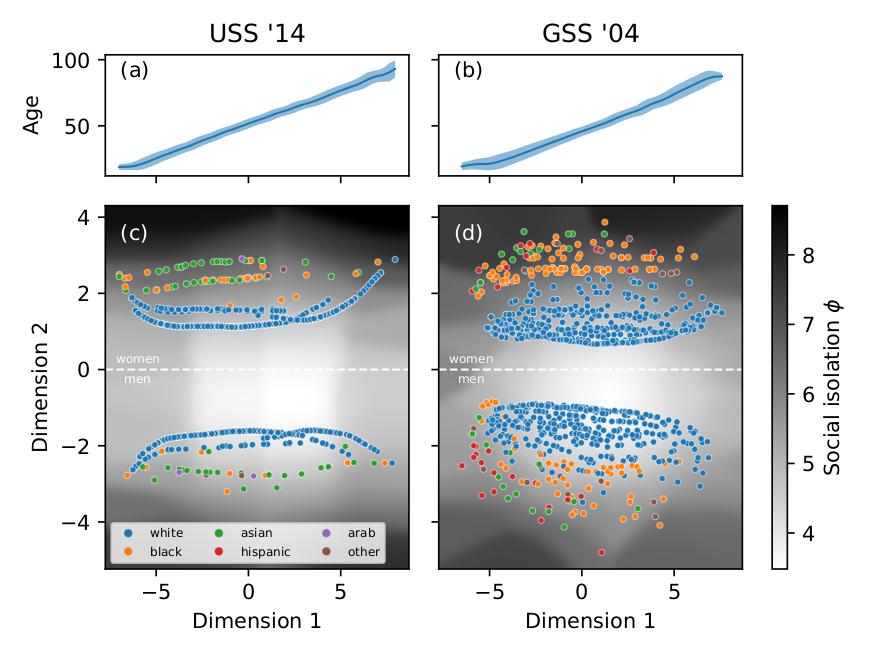 How people connect with one another is a fundamental question in the social sciences, and the resulting social networks can have a profound impact on our daily lives. Blau offered a powerful explanation: people connect with one another based on their positions in a social space. Yet a principled measure of social distance, allowing comparison within and between societies, remains elusive.